Slicer, Hired Muscle // Slicer, High-Speed Antagonist
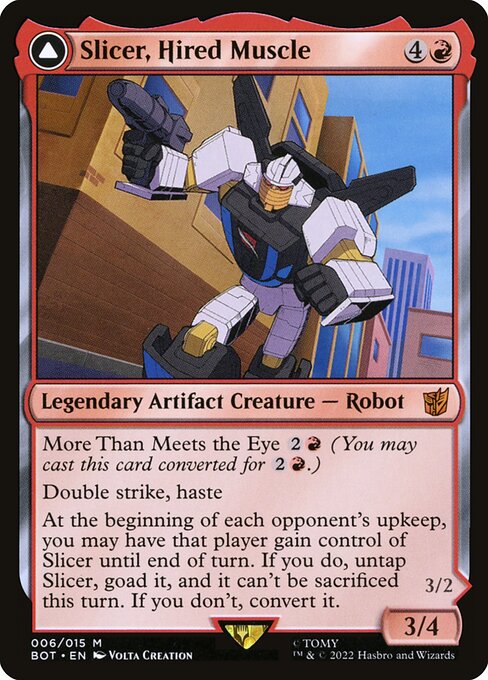
More Than Meets the Eye {2}{R} (You may cast this card converted for {2}{R}.) Double strike, haste At the beginning of each opponent's upkeep, you may have that player gain control of Slicer until end of turn. If you do, untap Slicer, goad it, and it can't be sacrificed this turn. If you don't, convert it. // Living metal (During your turn, this Vehicle is also a creature.) First strike, haste Whenever Slicer deals combat damage to a player, convert it at end of combat.
How Slicer decks play in EDH
Slicer is a mono-red commander you can cast for three mana as a double striking hasty creature, and who then offers each opponent control of him on their upkeep. If they take him he is goaded and has to attack somebody else; if they decline, he converts into a Vehicle on your side. Build him if you enjoy political decks and do not mind your commander spending half the game on the other side of the table.
The engine
The choice is yours each upkeep, and both answers are fine, which is the clever part. Handing Slicer to an opponent means a double striking hasty creature is attacking one of your rivals rather than you, and it comes back. Declining converts him into the Vehicle side, which has living metal so it is a creature during your turn, with first strike and haste, and converting back happens automatically when he connects with a player. Either way you are not spending cards, and either way somebody is taking damage who is not you.
Giving him away is usually correct
The instinct is to keep your commander. Here, handing him over goads him, which forces him to attack a player other than whoever holds him, and he returns to you at end of turn. So you are lending an opponent a weapon they must point at a third party. Against a table of three that is a free attack every turn cycle aimed wherever the politics are worst for you, and you keep the card.
Build the table into a brawl
Since the deck is already making opponents attack each other, the rest of the list should push in the same direction. Disrupt Decorum goads every creature you do not control at once, which turns a defensive table into a war you are not part of. Fumiko the Lowblood forces opponents to attack every combat permanently, which with Slicer bouncing around means your opponents are spending their resources on each other for the whole game.
Profiting from the fighting
A table full of forced attacks means a table full of dying creatures, and mono-red has ways to charge for that. Vicious Shadows deals damage to a player equal to their hand size whenever any creature dies, which in a game you have deliberately turned into a brawl is an enormous amount of damage you did not have to attack for. Agitator Ant hands out counters and goads in the same breath, making the fight both bigger and more certain.
Where it goes wrong
This deck loses when the table refuses to play along, which happens more than you would like: a player who holds Slicer and simply attacks you anyway, or a board where nobody can profitably attack each other, leaves you with a three-mana creature and a pile of situational cards. It also loses to graveyard-free, creature-light decks that the goading does nothing to. The common building mistake is building Slicer as a Voltron commander and loading him with equipment, which you then hand to an opponent along with him. The second is forgetting the choice is per opponent per upkeep, so you are making this decision several times a turn cycle and should not autopilot it.
Five cards to start with
- Disrupt Decorum — Goads every creature you do not control at once, turning the whole table into a fight you are standing outside of.
- Fumiko the Lowblood — Permanently forces your opponents to attack each combat, which makes the whole plan reliable rather than occasional.
- Agitator Ant — Hands out counters and goads the creatures that took them, making the brawl both larger and compulsory.
- Vicious Shadows — Charges every opponent for every creature that dies, which in a table you have forced into combat is a lot of damage.
- Sol Ring — A cheap commander and a deck full of four and five-mana enchantments wants the extra mana early.
Most-played cards
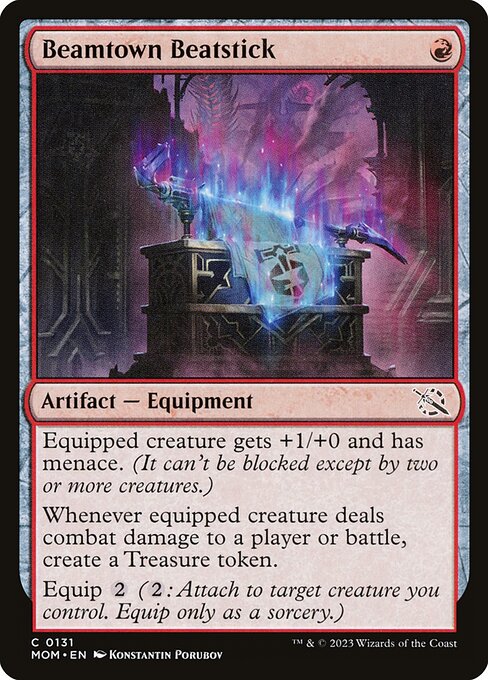
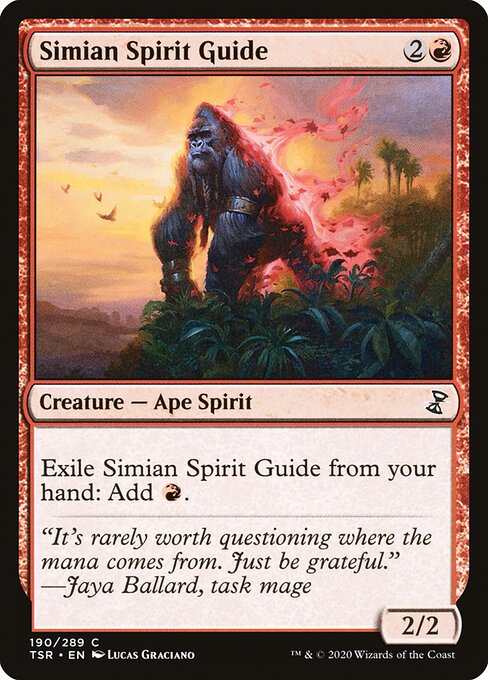
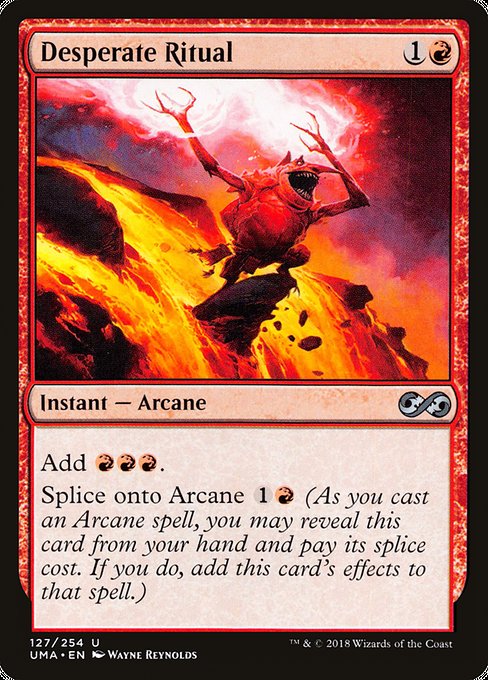
20 cards · about $32.01Play rates from EDHREC. Prices from Scryfall, refreshed daily.
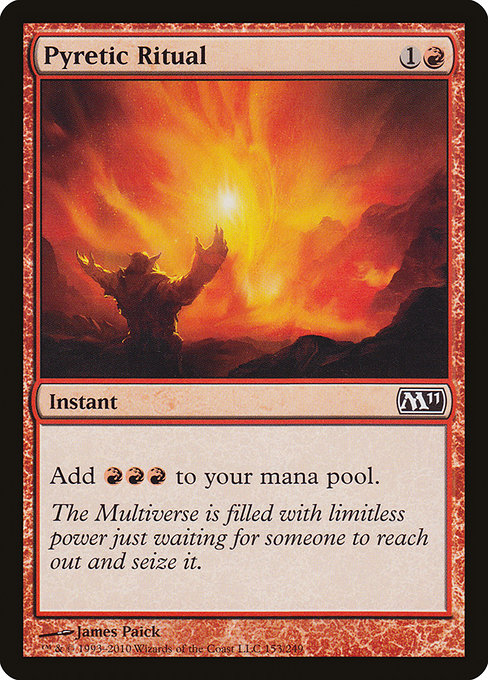
Ramp (5)

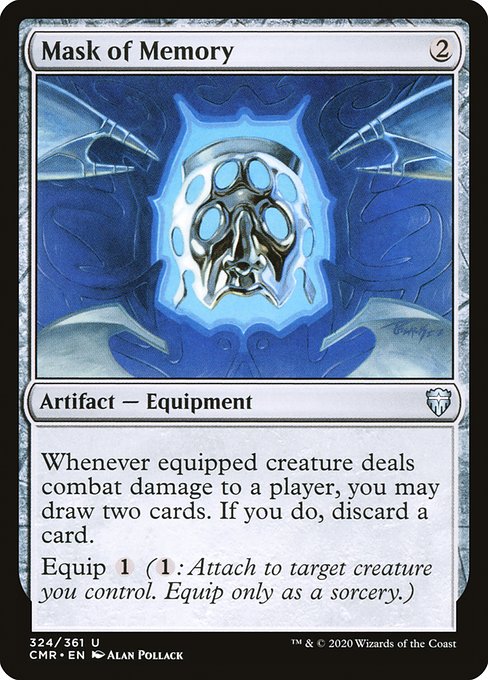
Card draw (2)
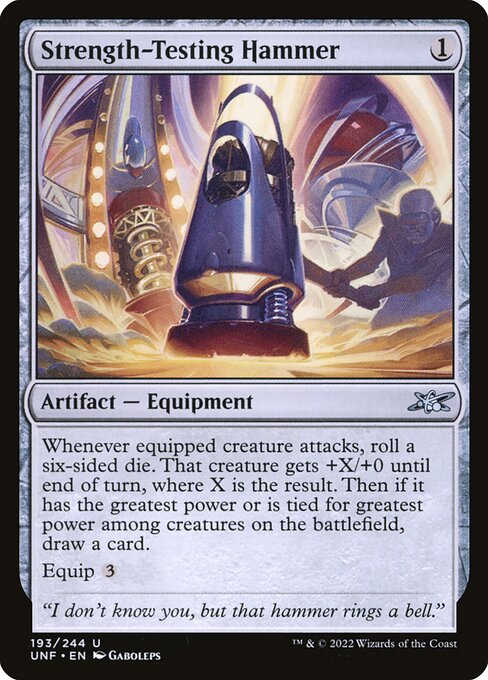
Removal (1)

Creatures (3)


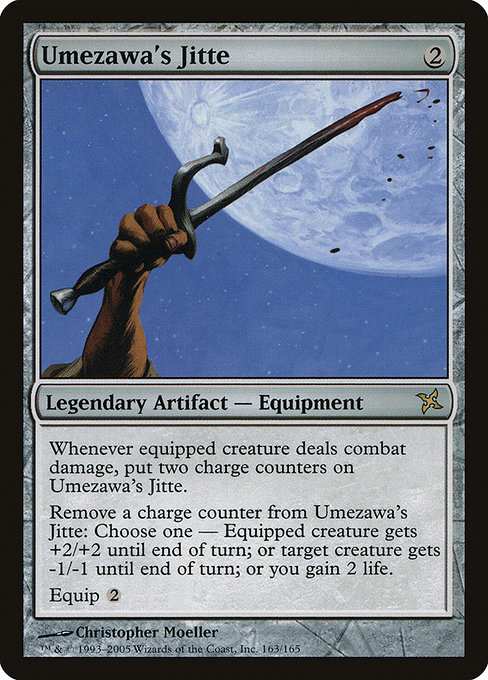
Synergy & payoffs (9)


Build the full 100
Grimoire generates a complete, Commander-legal Slicer, Hired Muscle // Slicer, High-Speed Antagonist decklist with a written strategy, a full mana base and live prices — from the whole card pool, or only from cards you already own.
Start with SlicerSlicer deck questions
What colors can I use in a Slicer, Hired Muscle // Slicer, High-Speed Antagonist deck?
Slicer, Hired Muscle // Slicer, High-Speed Antagonist has a mono-red color identity, so every card in the deck must be red or colorless. That includes mana symbols in rules text, not just casting cost.
What are the best cards for Slicer, Hired Muscle // Slicer, High-Speed Antagonist?
The cards played most often in Slicer, Hired Muscle // Slicer, High-Speed Antagonist decks include Karn, Argent Defender, Brazen Bluff, Kang, Suspicious Captain. The full list of staples above is grouped by the job each card does, so you can see the deck's skeleton rather than just a pile of names.
How much does a Slicer, Hired Muscle // Slicer, High-Speed Antagonist deck cost?
The 20 most-played cards shown above come to roughly $32.01 at current market prices. A complete 100-card build costs more, and Grimoire can generate a budget version instead if you set a price ceiling.
Can I build a Slicer, Hired Muscle // Slicer, High-Speed Antagonist deck from cards I already own?
Yes. Import your collection into Grimoire and choose "my cards" when you build. The generator will only use cards you actually own, and the Missing Cards page shows what you would need to buy to finish any list.