Betor, Ancestor's Voice
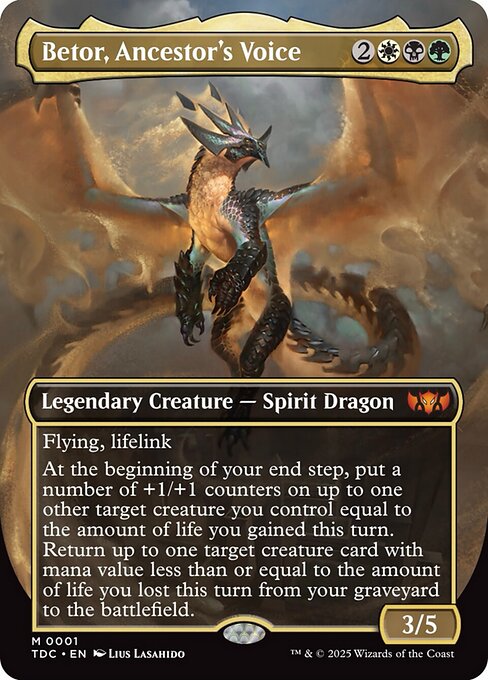
Flying, lifelink At the beginning of your end step, put a number of +1/+1 counters on up to one other target creature you control equal to the amount of life you gained this turn. Return up to one target creature card with mana value less than or equal to the amount of life you lost this turn from your graveyard to the battlefield.
A ready-made Betor decklist
Complete 100-card Abzan deck, free to read, with prices and buy links.
How Betor decks play in EDH
Betor is a five-mana flying lifelinker in white, black and green whose end step does two things at once: it puts counters on a creature equal to the life you gained this turn, and it returns a creature from your graveyard whose mana value is no more than the life you lost this turn. Gaining and losing life are both resources here, which is unusual. Build it if you like decks where the two halves of your life total both do work.
The engine
Most lifegain decks treat losing life as pure downside. Here it is the cost of reanimation, which means cards you would normally avoid become engine pieces. Phyrexian Arena draws you a card and costs you one life every upkeep, so it quietly sets your end step reanimation threshold to one every single turn for free. Bitterblossom does the same while also making a flier. On the other side, Betor has lifelink himself, so simply attacking with him sets the counter half, and Soul Warden turns every creature entering into another point of gain.
Two numbers, tracked separately
The trigger reads life gained this turn and life lost this turn as separate totals, so they do not cancel out. Gaining four and losing three in the same turn gives you four counters and a three-drop back from the graveyard, not a net of one. That means a deck doing both at once is not working against itself, and effects that trade life back and forth are far better here than they look. Keep track of both numbers through the turn rather than watching your life total move.
Reanimation on a budget
The returned creature's mana value has to be at most the life you lost, which keeps this honest: one point of life loss returns a one-drop. That pushes the deck toward cheap creatures with strong enter-the-battlefield effects rather than toward the usual expensive reanimation targets, and toward stacking several small sources of life loss so the ceiling rises. Painful lands, your own sacrifice effects and cards like Phyrexian Arena all count.
Spending the life you gain
Counters on one creature per turn is good but narrow, so the deck wants another outlet for the lifegain. Well of Lost Dreams turns gained life into cards at a rate you control, which converts a big lifelink attack into a refilled hand. Ajani's Pridemate grows on its own every time you gain life, which means the deck has a threat that does not need Betor's trigger at all and keeps working if he is removed.
Where it goes wrong
This deck loses to removal pointed at the commander, because both halves of the engine are stapled to a five-mana creature with no protection. It also loses to being too cute: a deck that spends every slot on small life swings and none on actual threats gains a lot of life and never wins. The common building mistake is running expensive reanimation targets, which the trigger cannot reach unless you are losing enormous amounts of life. Build toward cheap creatures with good enter effects. The second mistake is forgetting the counters go on another target creature, so Betor cannot grow himself.
Five cards to start with
- Phyrexian Arena — A card every upkeep and one life lost, which quietly sets your reanimation floor every single turn.
- Soul Warden — One mana that turns every creature entering into lifegain, which is the counter half of the trigger.
- Bitterblossom — Loses you one life each upkeep and builds a board of fliers, feeding both halves at once.
- Well of Lost Dreams — Turns the life you gain into cards at a rate you choose, which a lifelink commander supplies in bulk.
- Ajani's Pridemate — A threat that grows from lifegain on its own, so the deck still functions when Betor is removed.
Most-played cards
20 cards · about $53.00Play rates from EDHREC. Prices from Scryfall, refreshed daily.
Ramp (2)


Card draw (2)

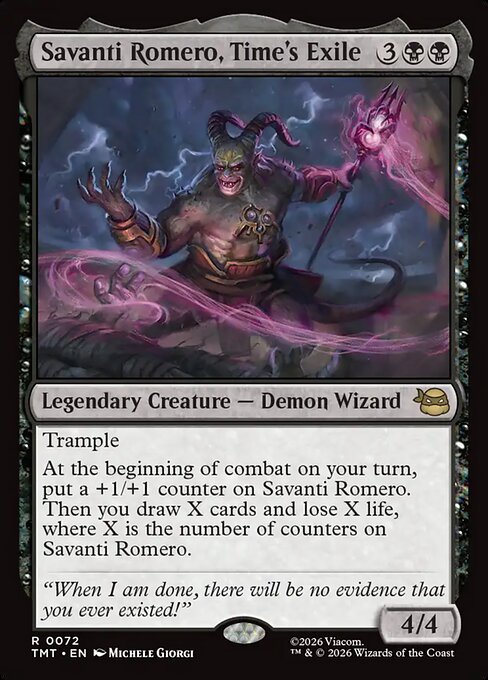
Removal (2)


Creatures (12)


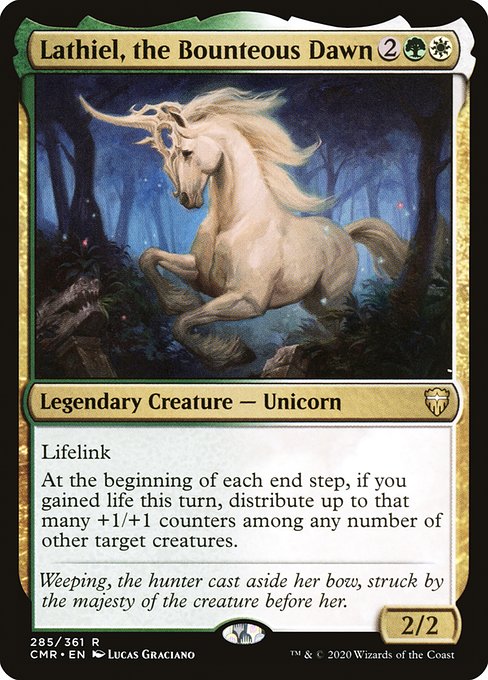
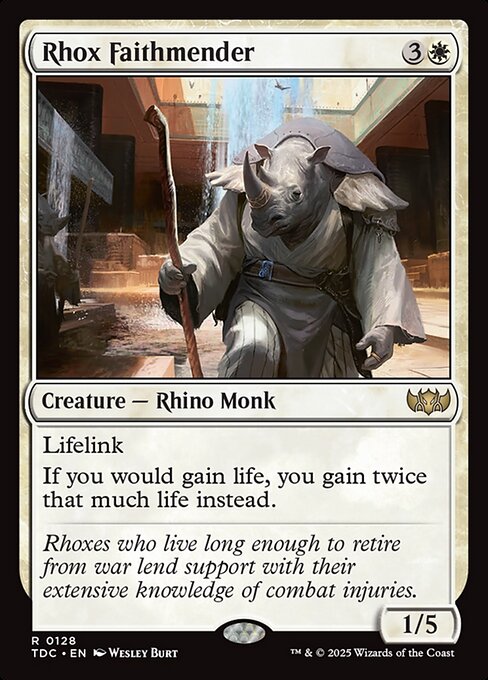


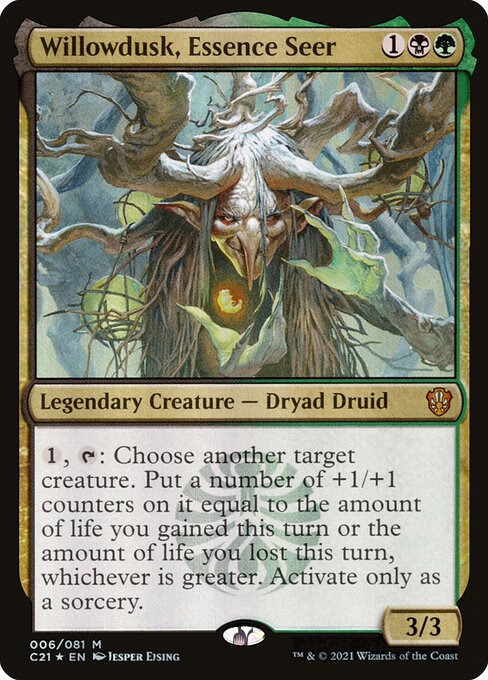
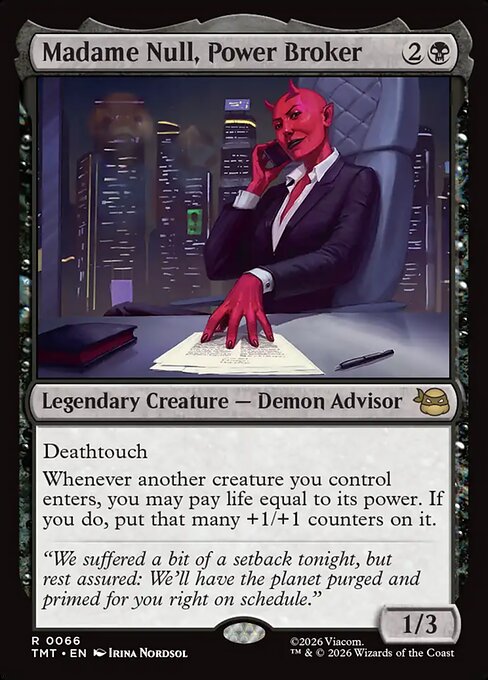
Synergy & payoffs (2)
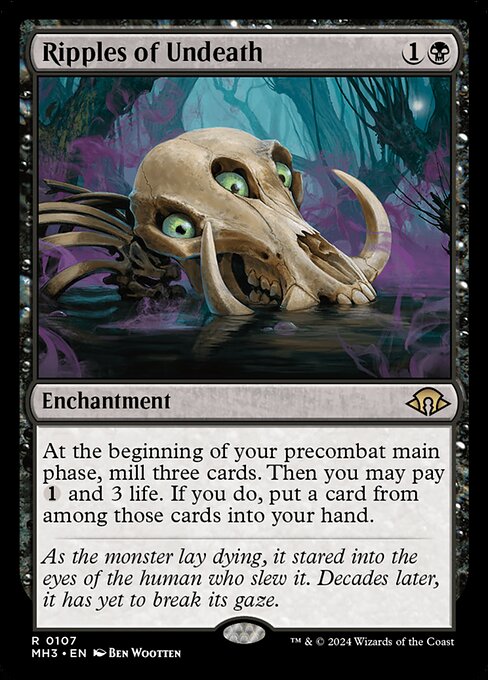

Build the full 100
Grimoire generates a complete, Commander-legal Betor, Ancestor's Voice decklist with a written strategy, a full mana base and live prices — from the whole card pool, or only from cards you already own.
Start with BetorBetor deck questions
What colors can I use in a Betor, Ancestor's Voice deck?
Betor, Ancestor's Voice has a Abzan color identity, so every card in the deck must be white, black and green or colorless. That includes mana symbols in rules text, not just casting cost.
What are the best cards for Betor, Ancestor's Voice?
The cards played most often in Betor, Ancestor's Voice decks include Niv-Mizzet, Ghost Counsel, Kwia Vigorbloom, Liliana the Faultless. The full list of staples above is grouped by the job each card does, so you can see the deck's skeleton rather than just a pile of names.
How much does a Betor, Ancestor's Voice deck cost?
The 20 most-played cards shown above come to roughly $53.00 at current market prices. A complete 100-card build costs more, and Grimoire can generate a budget version instead if you set a price ceiling.
Can I build a Betor, Ancestor's Voice deck from cards I already own?
Yes. Import your collection into Grimoire and choose "my cards" when you build. The generator will only use cards you actually own, and the Missing Cards page shows what you would need to buy to finish any list.